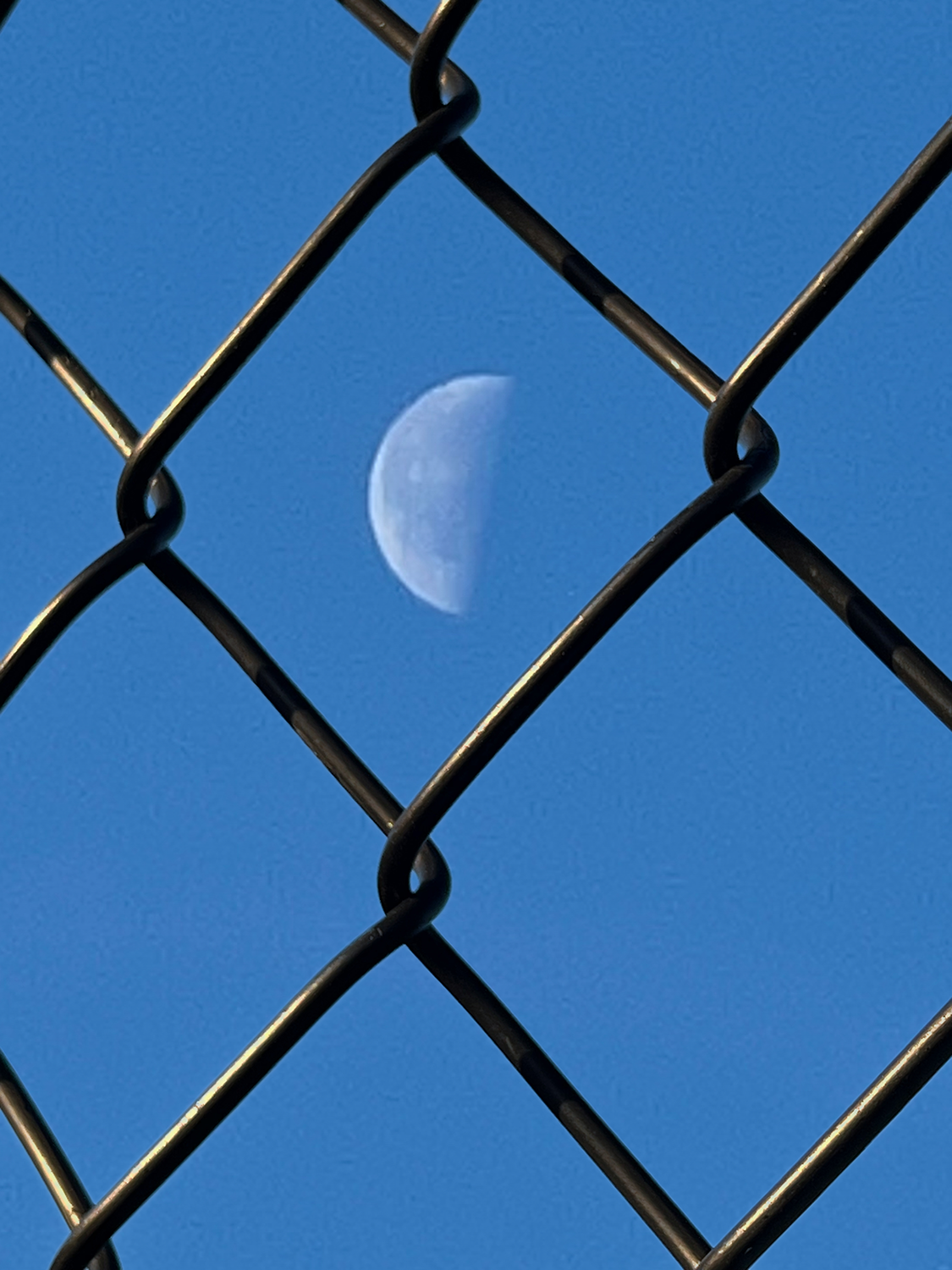
It could be a point in human life where existence presses so heavily that the world seems to collapse into a single claim: that nothing else is possible. This inward contraction roots in a distortion of our perception of reality, giving it an obscure and ominous appearance. The person who begins to see themselves as powerless stops sensing the vastness of what remains open to them. They lose contact with the quiet, stubborn inner strength that belongs to every human being: the ability to shape oneself.
One of the greatest dangers is allowing oneself to be pierced by the posture of the victim, the stance that insists that destiny has been sealed and no new form of life can be created. This attitude freezes the imagination. It steals from a person the noblest task they possess: the work of becoming who they are capable of being.
Each of us carries within a kind of unfinished sculpture, a form waiting to be shaped through choices, refusals, discipline, and vision. Even when circumstances impose limits, the deeper question is whether the person still turns toward the task of self-formation. To abandon that task is to betray oneself long before the world ever could.
Suffering, limitation, and crisis are not interruptions of life but its raw material. And without pain and painful experiences, it wouldn’t be needed to search for meaning; ease does not force reflection, but suffering does. They demand not resignation but interpretation, transformation, and a willingness to stand apart from the forces that flatten individuality. The human being grows not by surrendering to circumstances but by taking responsibility for the meaning they give to those circumstances. Inner dignity begins precisely at the moment when a person refuses to let external conditions define the borders of their becoming.
Yet this inner dignity becomes difficult to access in an age obsessed with comfort. When life is arranged to minimize friction, provide convenience, and avoid difficulty at any cost, the human being softens in ways that are dangerous. The craving for ease dulls the discipline required to stand upright when tragedy inevitably arrives. And tragedy does arrive — not as an exception, but as a certainty woven into the structure of living. To expect life to be smooth is to prepare oneself poorly for the moment when it breaks open.
Comfort creates the illusion that we are safe. Strength reveals that we can endure. The modern preference for effortless living weakens the very muscles — moral, emotional, spiritual — that must carry us through crisis. To seek only what is pleasant is to forget that human greatness is shaped by fire, not by pillows. The challenge is not to reject what is pleasant but to refuse to depend on it.
True resilience grows when we step voluntarily into difficulty, cultivate endurance, and train ourselves to remain whole in the face of uncertainty. Martial arts understood this long before psychology tried to explain it. In every genuine discipline of that kind, especially those born from struggle and disguised as play, the body learns to answer unpredictability with creativity, to transform instability into rhythm, to accept the chaotic motion of the world as a kind of dialogue. The circular game of feints, kicks, escapes, and returning flow teaches what comfort hides: that we are not made to be preserved — we are made to respond. And in responding, we forge strength.
This clarity carries another implication: that one’s life cannot be outsourced. No other person, no matter how compassionate or willing, can take up the responsibility of another’s inner orientation. To demand constant rescue, to expect another to carry one’s burdens, weakens the very faculty that makes life meaningful: the capacity to respond to one’s own existence. Assistance freely offered is a gift. Assistance demanded becomes a quiet form of self-abandonment.
There is also a subtler escape: hiding from our own duty to create ourselves by trying compulsively to “save” others. It is an old and seductive illusion — the fantasy that by dedicating ourselves to repairing someone else’s life, we can avoid confronting the unfinished sculpture within our own. But no amount of external rescue substitutes for the inner labor every life requires. Helping others is noble only when it emerges from self-possession, never when it serves as an evasion of it.
Human existence becomes richer when approached as the dancer approaches the dance floor: with full presence — that vivid sense of inhabiting one’s own body and attention so completely that life unfolds moment by moment. The dancer improvises, accepts, and even celebrates what has actually happened, not what he believes should have happened. He moves through life without needing to conceptualize every step. His art is a pact with reality, an embrace of serendipity, a trust in the shaping power of chaos. Life offers surprises, fractures, unexpected openings. The dancer takes them not as threats but as invitations.
In the dancer there is no contradiction between contemplation and action. He is fully aware, and fully engaged. He listens and moves. Reflects and responds. Watches and creates. Life’s turbulence does not confuse him; it energizes him. By accepting what arrives, he finds freedom within the unpredictable.
Taking care of oneself is part of this dance. It is not vanity — it is self-respect. And self-respect forms the earliest school in which one learns how to respect others. A person who values their own vitality, their own becoming, naturally carries that reverence outward. The dignity they guard within themselves becomes a lens through which they can recognize the dignity in other lives.
This self-care begins with the body that carries us: what we eat, when we eat, what and how we drink, how we breathe. The places in which we live shape our nervous system. The people we allow near us shape our inner world. We should seek the company of individuals who pursue their own strength, whose lives encourage us to become stronger ourselves. Physiology is not separate from ethics; it is its foundation. To care for this organism — this fragile, stubborn, pulsating creature we inhabit — is already to care for those around us. Because every thoughtful gesture toward ourselves becomes a gentler gesture toward the world.
And the dancer is not merely a dancer: he is a fighter, a warrior against stagnation, comfort, debilitation, and unawareness. He is fully awake, his eyes perceiving everything that exists and influences his world. He does not merely move within reality; he shapes it. He creates himself and his world, giving form to its rules, its ethics, its aesthetics. In his movement lives rebellion and authorship — the refusal to be defined by inertia, and the insistence on becoming a creator of meaning rather than a passive inhabitant of circumstance.
As I look at all this, I realize something not so much taught as discovered: the path does not vanish when circumstances narrow. What remains open is the person who refuses to close. Strength grows in those who turn toward life instead of away from it. And in that turning — in that refusal to surrender the shaping of one’s own existence — a more authentic life quietly begins. A life where comfort no longer seduces us, suffering teaches us, responsibility steadies us, and the human spirit continues its unfinished, stubborn, magnificent task of becoming.